Rattan Knowledge
How Natural Rattan Is Processed: From Raw Material to Finished Products
September 29, 2026
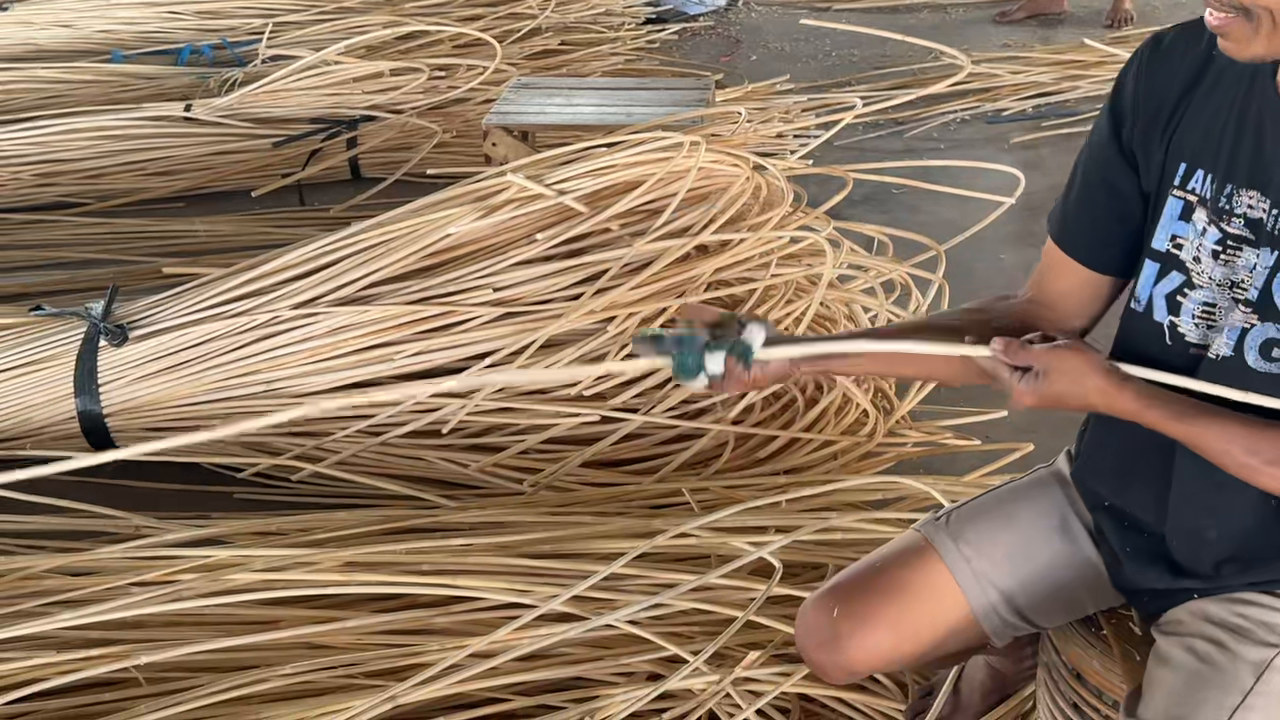
Natural rattan is a flexible material used across furniture, cane webbing, baskets, tableware and many other interior and home products.
For B2B buyers, understanding how rattan moves through the production process helps clarify where material quality, colour, structure and consistency are controlled.
At Tensor Rattan, the workflow covers raw material preparation, processing, handcraft production, inspection, packing and export preparation through the Manufacturing & Quality process.
1. Raw Rattan Sourcing
The process begins with natural rattan sourced through established local supply channels in Indonesia.
Raw materials are reviewed according to the intended application, because different product directions may require different diameters, structures, surface characteristics and material grades.
Careful material selection at the beginning helps create a more consistent foundation for later processing.
2. Transportation and Material Preparation
After collection, rattan is transported to the processing facility.
Before further production, the material needs to be prepared and organised so that it can move into cleaning, drying and grading stages.
Proper handling at this stage helps reduce unnecessary material damage and keeps different material groups organised.
3. Cleaning and Drying
Cleaning removes surface dirt and prepares the rattan for further processing.
Drying is another important step because moisture levels can affect material stability, colour and later manufacturing performance.
The exact preparation method depends on the material type and intended use.
4. Classification and Grading
After preparation, rattan can be classified according to characteristics such as:
- Diameter
- Appearance
- Colour
- Surface condition
- Intended application
Grading allows materials with similar characteristics to be grouped together before processing.
This is particularly useful for projects where buyers require more consistent colour, size or finish.
5. Splitting, Polishing and Forming
Depending on the final product, rattan may be split, shaped, polished or further processed.
For example, semi-finished materials such as cane webbing and rattan components require different processing methods from finished furniture or basket products.
The production direction is therefore determined by the required specification rather than by one fixed workflow.
6. Handcraft Production
Handwork remains an important part of natural rattan manufacturing.
Processes such as weaving, forming, trimming, assembly and surface finishing often require skilled manual work.
This is especially important for products with curved structures, woven surfaces or customised forms.
Machine-assisted processing can also be used where repeatability and efficiency are required.
7. Quality Inspection During Production
Quality control is not limited to the final stage.
Inspection can take place throughout production, including:
- Raw material inspection
- Processing inspection
- Colour and texture review
- Structure and dimension checks
- Finished product inspection
- Pre-packing inspection
Different product types require different inspection priorities.
For example, furniture projects may focus more heavily on dimensions and structure, while cane webbing projects may place more emphasis on width, weave pattern and colour consistency.
8. Finishing and Product Preparation
Finished products are reviewed before packing.
Depending on the project, this may include checking:
- Surface finish
- Dimensions
- Weaving consistency
- Product structure
- Colour
- Accessories
- Packaging requirements
OEM / ODM Development projects may also involve project-specific branding, labels or packing instructions.
9. Packing and Export Preparation
The final stage is packing and shipment preparation.
Packing needs to protect products from moisture, compression and unnecessary movement during storage and transport.
The packing method depends on whether the shipment contains raw materials, semi-finished components or finished products.
Proper container preparation is also important for export-oriented orders.
From Material to Finished Product
Natural rattan manufacturing is not a single production step.
It is a connected process that combines material selection, preparation, processing, handcraft production, inspection and packing.
For B2B projects, the exact workflow can be adjusted according to product structure, material requirements and the final application.
If you are developing a natural rattan product or sourcing rattan materials, you can explore our manufacturing capabilities and product range below.